
How to Read This Gallery as a Serious Buyer
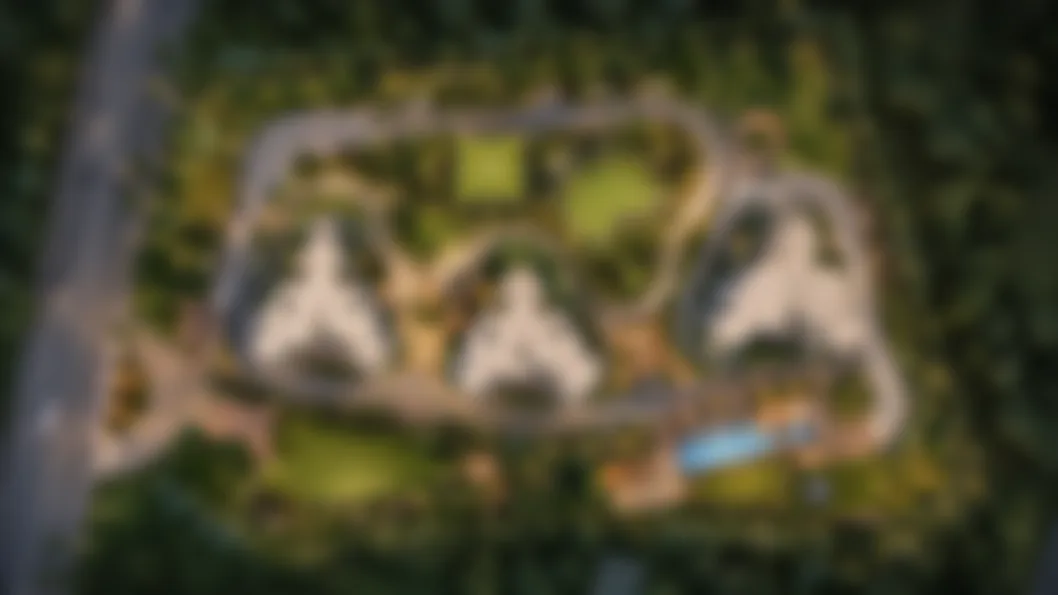
Most real-estate galleries are consumed passively. A more useful approach is to read each image as a design signal. In this project, the visual set points to three recurring priorities: low visual clutter, a premium finish expression, and clear separation between architecture and open-space framing. The aerial frame establishes site character; the exterior frame communicates facade tone and massing; the interior references convey lifestyle expectations and material aspiration. In the same Bengaluru market, Purva Sanna Amanikere helps keep the gallery review tied to design evidence rather than only the most polished render or model-flat image.
Because Purva Park Royale is in a pre-launch window, visuals should be interpreted as representational references, not as legal construction drawings. That does not make them irrelevant. They still help you evaluate whether the project’s design language aligns with your taste and whether the launch is positioned as true premium or marketing-level premium. The key is to pair visual impressions with technical documents and specification sheets before taking a commercial call.
For families buying for self-use, interior references are especially useful to test whether room proportions and furnishing logic feel practical for real life. For investors, exterior and aerial views provide clues about long-term marketability, because facade identity and campus coherence influence resale perception even when square footage is comparable across competing projects.
What Each Visual Reveals About Purva Park Royale
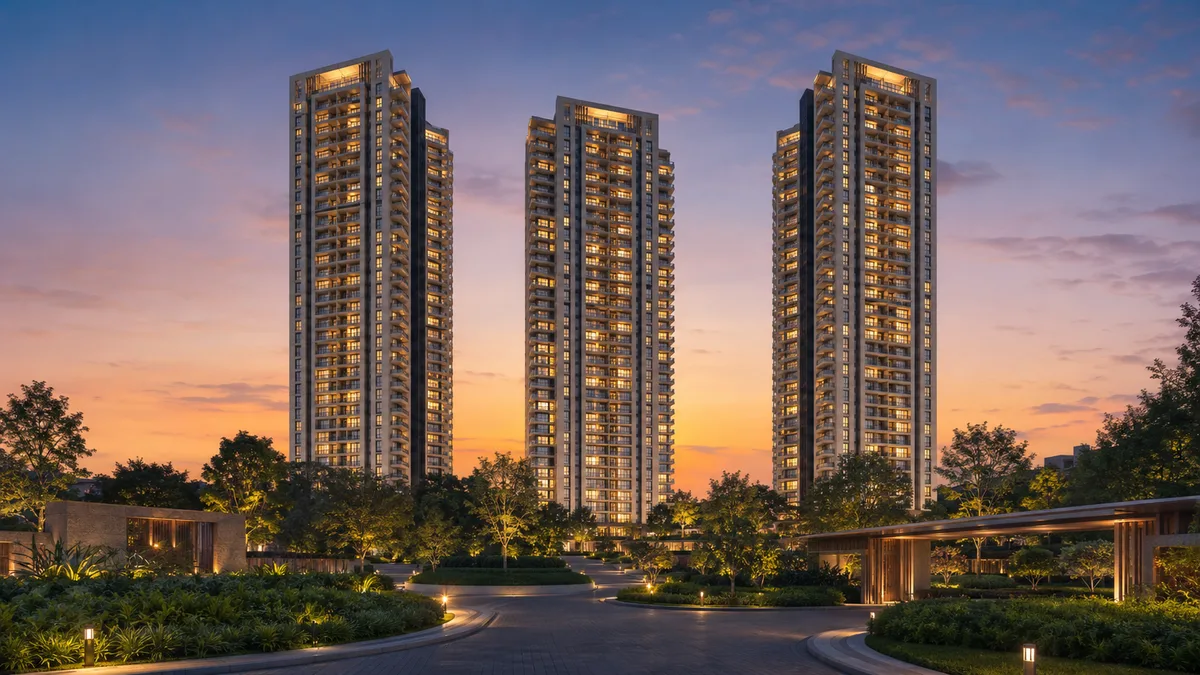
The exterior tower visual presents one of the three G+27 rises (~145 m) from a near-distance angle that captures the building's full elevation in one frame. The silhouette is deliberately vertical and disciplined, distributed across the 6-acre plot to maximise the central open space, and the balcony lines create a textured rhythm of recessed and projecting elements across the facade. The cladding palette reads as a cream-and-accent premium finish in keeping with the Puravankara flagship identity. This is the kind of image a buyer will receive on the formal brochure.
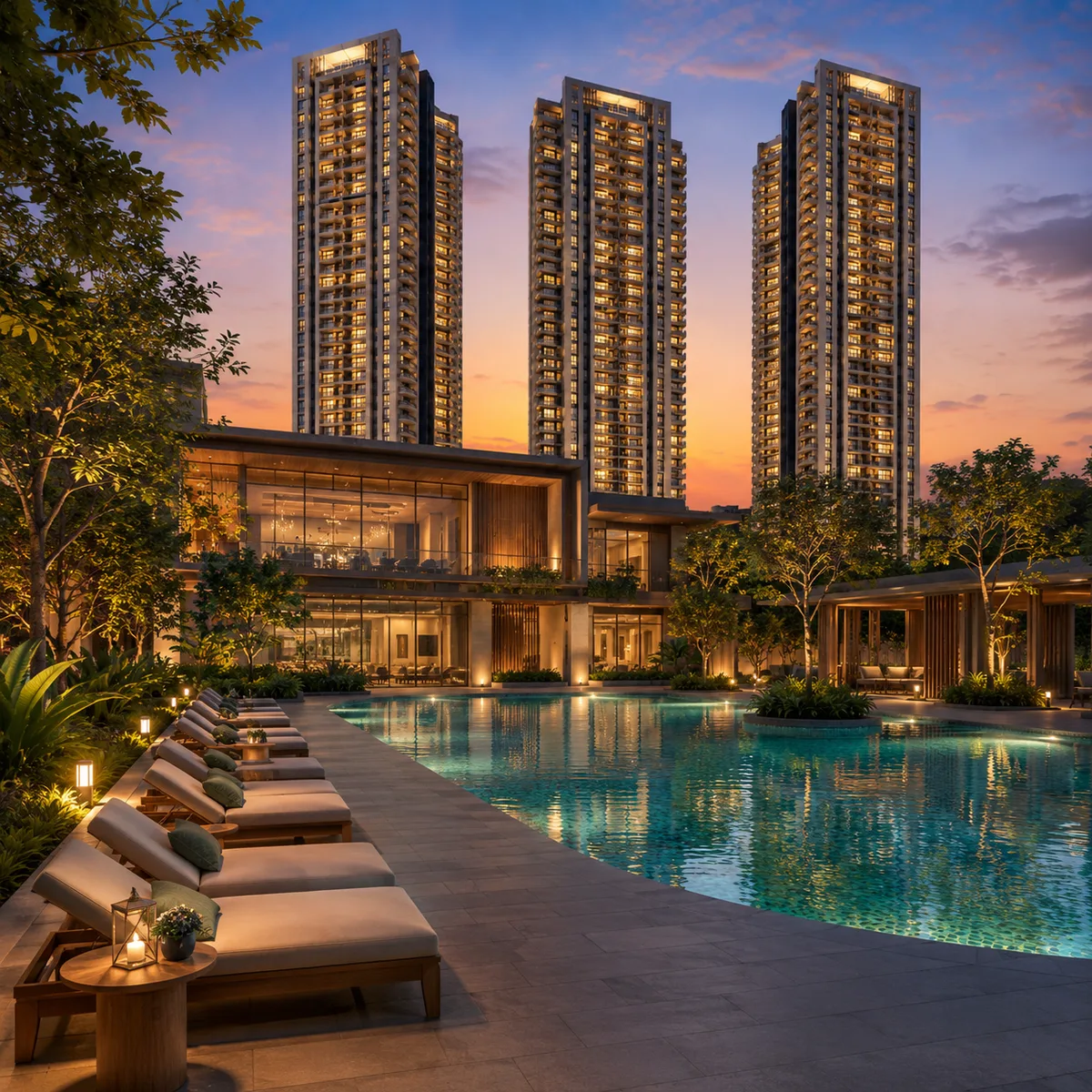
The residents' lobby frame stages a double-height arrival space with premium stone-and-veneer finish, lounge seating, and feature lighting - the daily transition space between the drop-off and the lifts. The swimming pool at dusk shows the water body beside the central clubhouse, with deck lighting reflected across the surface and a separate kids' pool annexed alongside, framed by landscape edges that connect the pool zone to the broader courtyard.
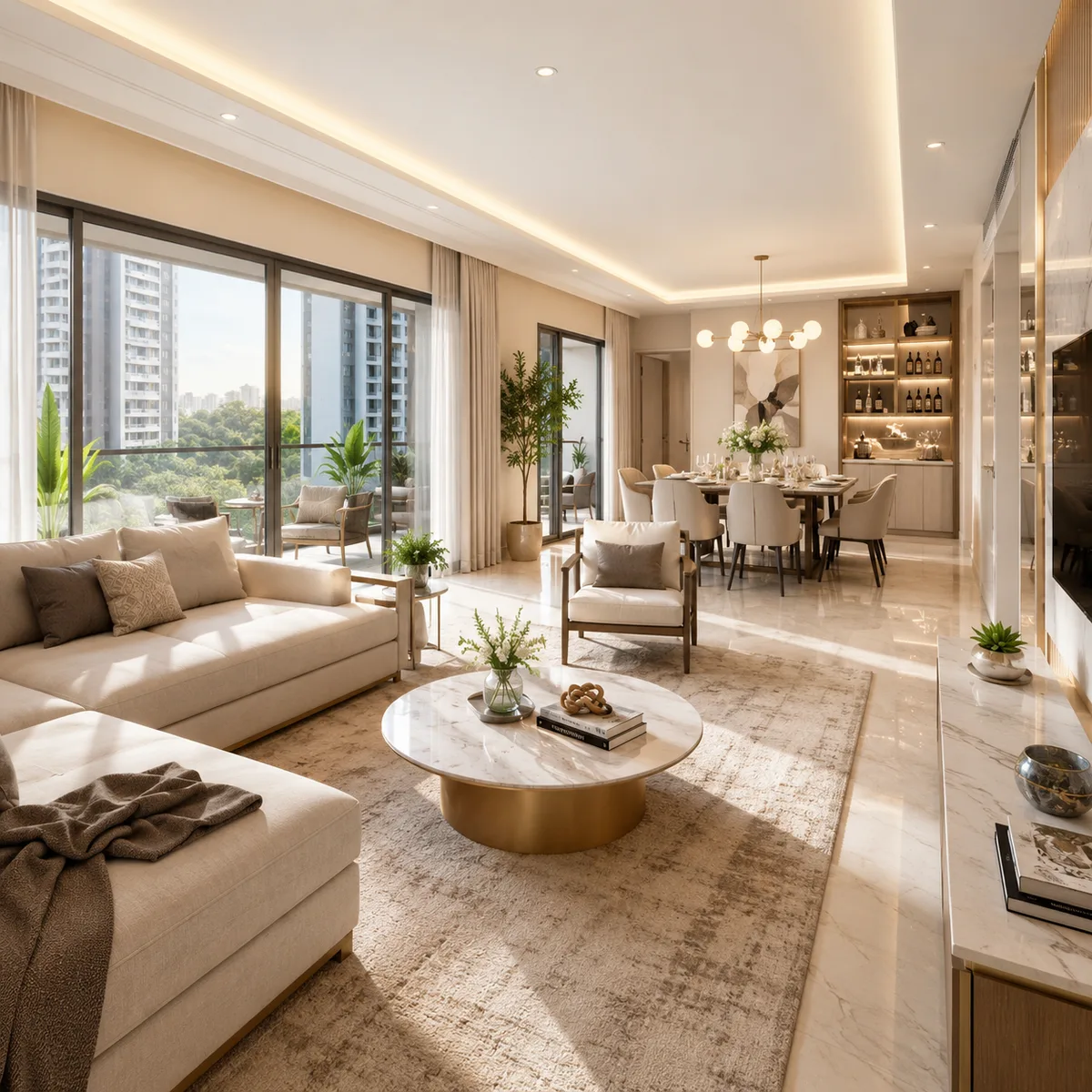
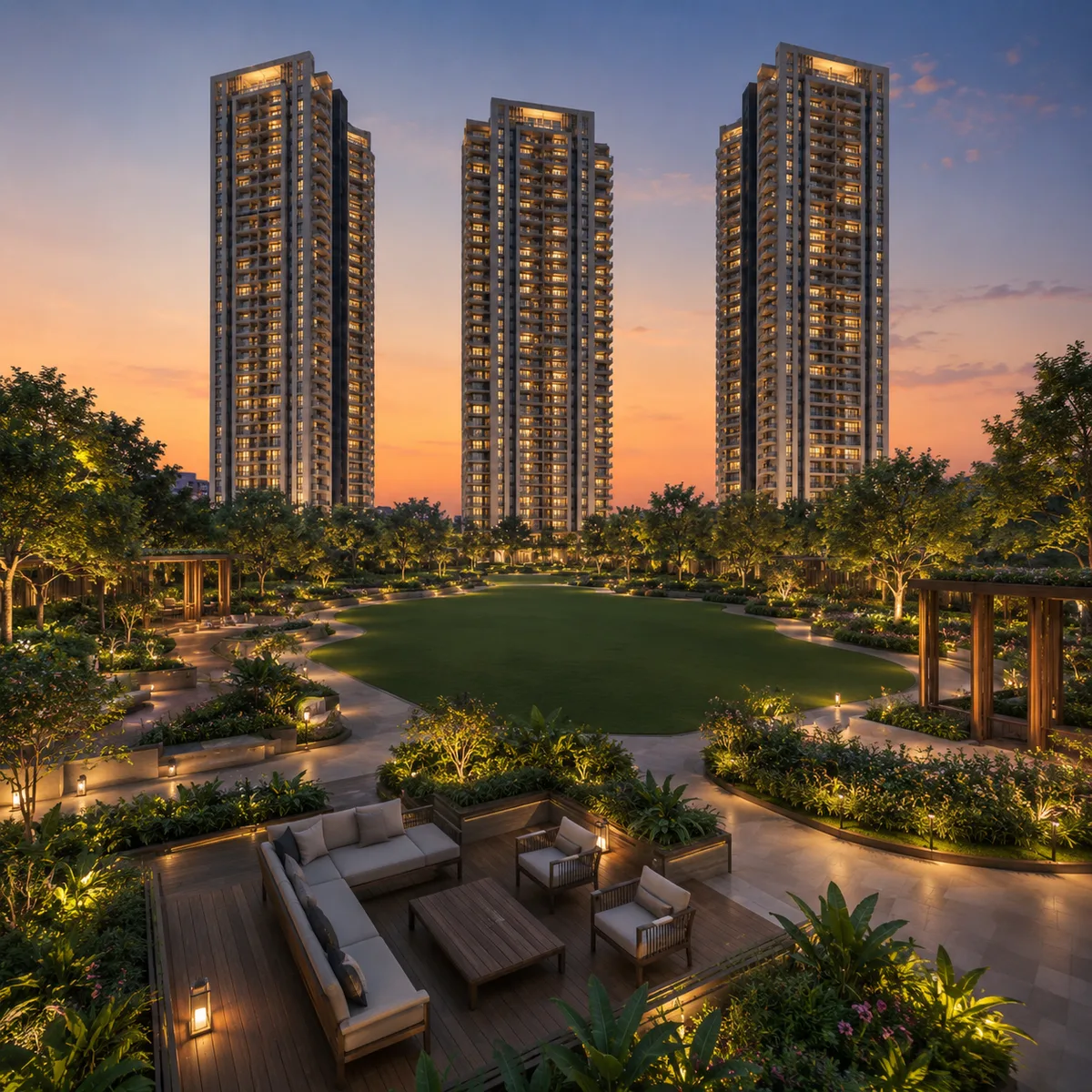
The landscaped courtyard visual stages the central open space with communal lawns, ornamental and shade planting, and walking-track circulation, with the three towers rising around it and the clubhouse anchoring one edge - the green heart of the ~70%-open-space campus. The kids' play area frame shows age-graded equipment over soft impact-absorbing surfacing, with shaded canopies and perimeter seating for accompanying adults. The interior living-dining reference communicates open-plan proportions with vitrified-tile flooring, balcony access as the primary light source, and a modular-ready kitchen beyond.
Across all the visual sets, the rendering quality is preview-grade - these are design-intent visuals rather than photographs of a completed building. Final facade colour, landscape maturity, and interior fit-out level will evolve through construction. The intent is to set the visual expectation for the formal brochure; Puravankara's render-to-handover consistency across 59 million sq ft of delivered stock is the buyer's reference for how closely the final building should track these previews.
Gallery-Led Comparison Strategy Across Competing Projects
When shortlisting premium projects, use the same gallery-reading framework across all options to avoid presentation bias. Start with the aerial view and ask whether the site appears spatially constrained or visually breathable. Move next to exterior visuals and evaluate facade consistency, balcony rhythm, and whether the building language feels timeless or trend-dependent. Finally, inspect interior references for practical detail: window proportion, furniture feasibility, circulation clarity, and natural-light direction cues.
This method helps you avoid over-indexing on dramatic hero renders that may not reflect lived reality. In high-ticket decisions, visual coherence often correlates with planning maturity. Projects that show consistent visual logic across aerial, facade, and interior references are usually more disciplined in design execution. Projects with highly fragmented visual language may still succeed, but they deserve deeper scrutiny during document review and site visit stages.
Another useful technique is to compare visual narrative with pricing narrative. If a project is priced at premium levels, the gallery should communicate premium planning confidence-not only luxury symbolism. For Purva Park Royale, the visual emphasis on low-density premium positioning appears consistent with its pricing and product story. Buyers should still validate with plans and specifications, but the image set does not conflict with the launch proposition.
Finally, keep a practical record while reviewing visuals: what is confirmed, what is illustrative, and what needs document backup. This simple habit improves decision quality dramatically.
Visual Due Diligence Checklist Before Booking
Gallery quality can influence emotional decision-making, so buyers should run a disciplined checklist before converting visual confidence into financial commitment. First, request the most recent brochure version and check whether image language, amenity layout, and specification claims are consistent. Second, ask for the latest floor plan packet and compare how well interior references match actual room dimensions. Third, verify which visuals are render-driven and which are plan extractions or conceptual references.
For Purva Park Royale, the visual set aligns with a premium narrative built around township scale, a deep amenity programme, and the flagship Puravankara specification standard. If you are comparing this project against alternatives, use the same checklist across every site: visual coherence, plan practicality, and specification-to-price alignment. Projects that score well on all three typically age better in both self-use satisfaction and resale perception.
A practical approach is to shortlist two or three competing projects and review each gallery side by side with unit plans and cost sheets. This reduces brand bias and helps identify which launch is genuinely stronger on day-to-day livability. In many cases, what looks impressive in a single hero image becomes less persuasive when matched against functional planning details.
Images on this page are project references sourced from available asset records and may include illustrative renders. Final delivered product can vary from visual representations.
Need the full image pack with latest floor-plan references and planning visuals in one shareable set?
Due-diligence references
Follow visuals with floor plans and pricing on this website. Compare facade language, landscape depth, amenity mood, and whether the visuals explain the product beyond launch polish.
Purva Park Royale Gallery FAQs
What does the Purva Park Royale gallery show?
The gallery presents working visual references of the G+27 towers, the residents' lobby, the swimming pool zone beside the central clubhouse, the landscaped courtyard, amenity decks, and interior layouts. The images capture the design intent rather than the final delivered finishes.
Are the Purva Park Royale gallery images final architectural renders?
No. The visuals are artist's impressions of the approved design. Final elevations, material finishes, and interior specifications will be locked through the brochure release and the sample home walkthrough closer to launch, with the sanctioned plan filed with K-RERA as the binding reference.
Can I visit the Purva Park Royale site to see the location?
Yes - reach the sales team via the contact form to schedule a site visit. The exact site pin at Vakil Garden City, the approach road off Kanakapura Road, and current ground status are shared at booking time, and visits are typically guided.
Will there be a sample home or experience centre at Purva Park Royale?
Sample homes and experience centres are typically opened around the formal launch following K-RERA registration. Until then, gallery renders and walkthrough visuals are the reference. Confirm sample home availability with the sales team during your enquiry.
Where can I see the Purva Park Royale layout drawings?
Indicative floor plan thumbnails for the 2, 3, and 4 BHK configurations sit on the floor plans page, with master plan visuals on the master plan page. The stamped plan pack and master plan drawings come with the brochure once K-RERA registration is filed.
Why are the Purva Park Royale visuals labelled as working references?
Because the project is in the pre-launch stage, brochure-final renders, interior shots, and elevation artwork are added as the design package locks down. The current images are flagged as orientation material rather than contractual representations.